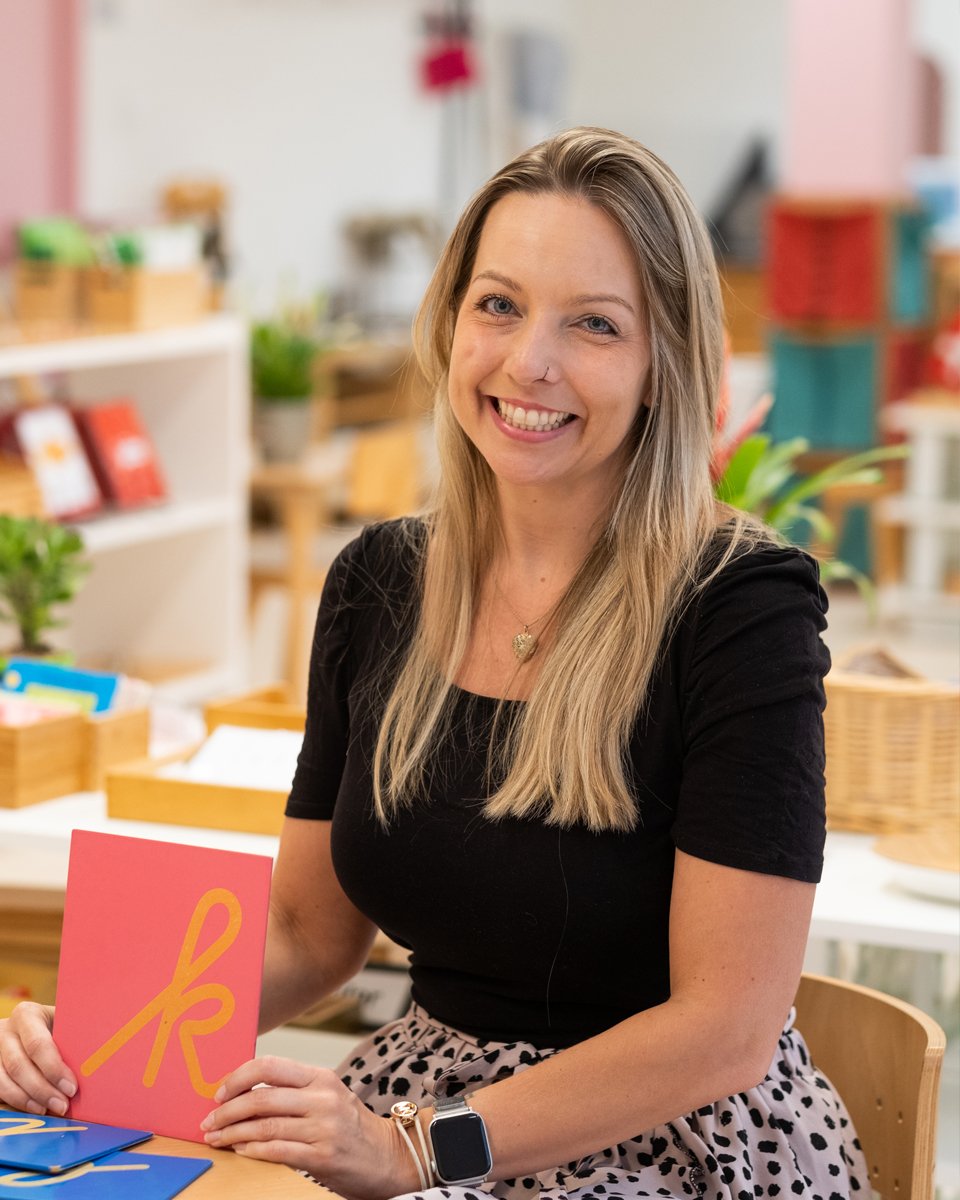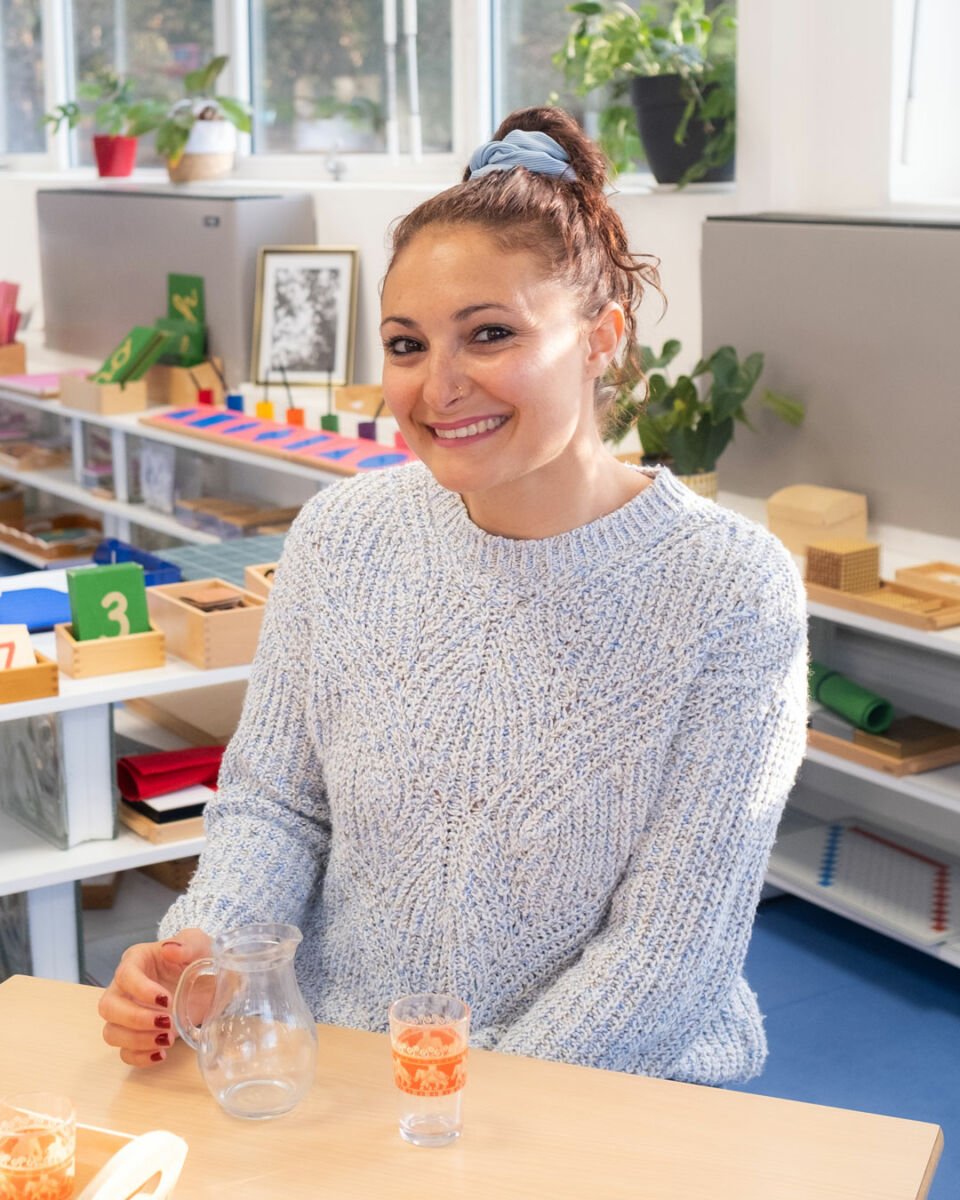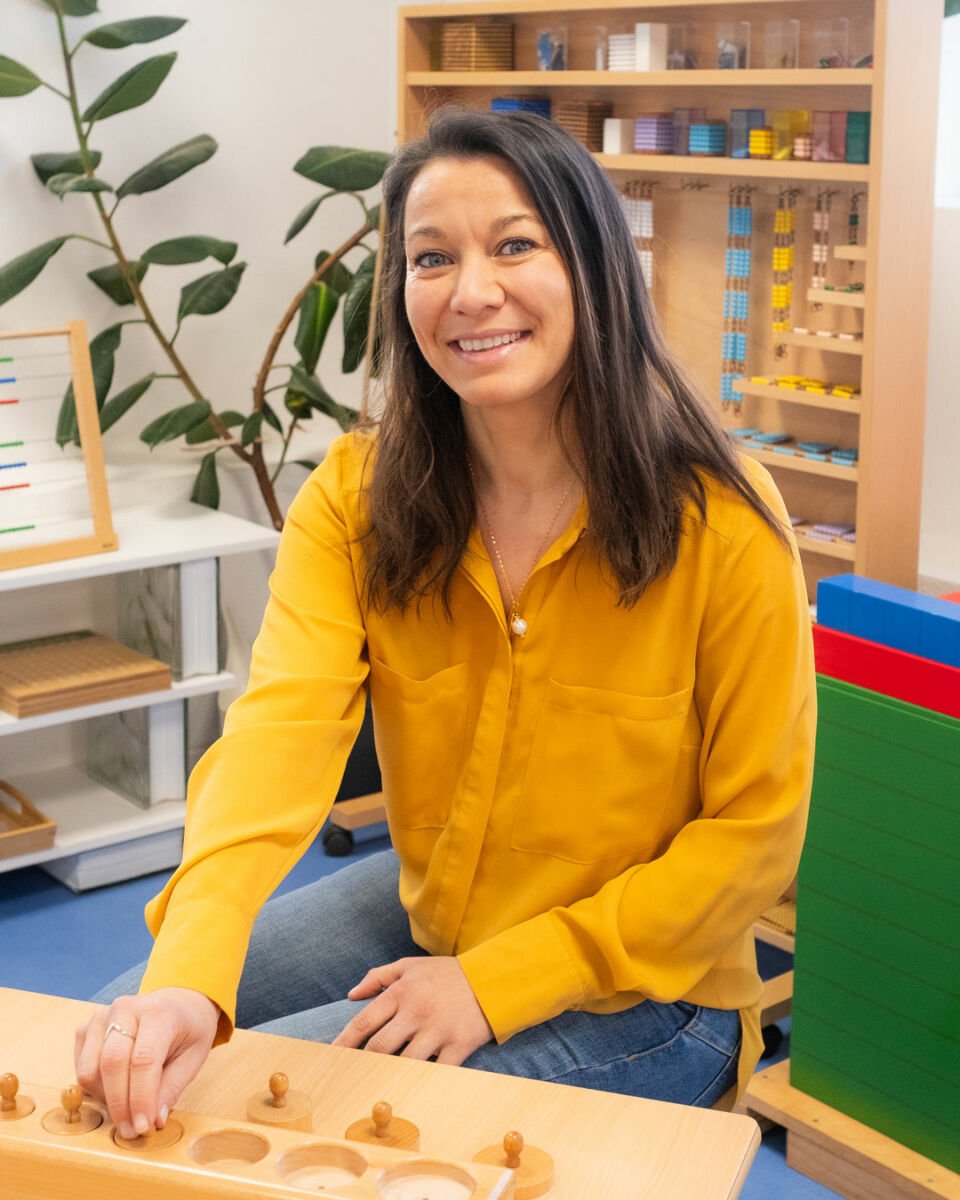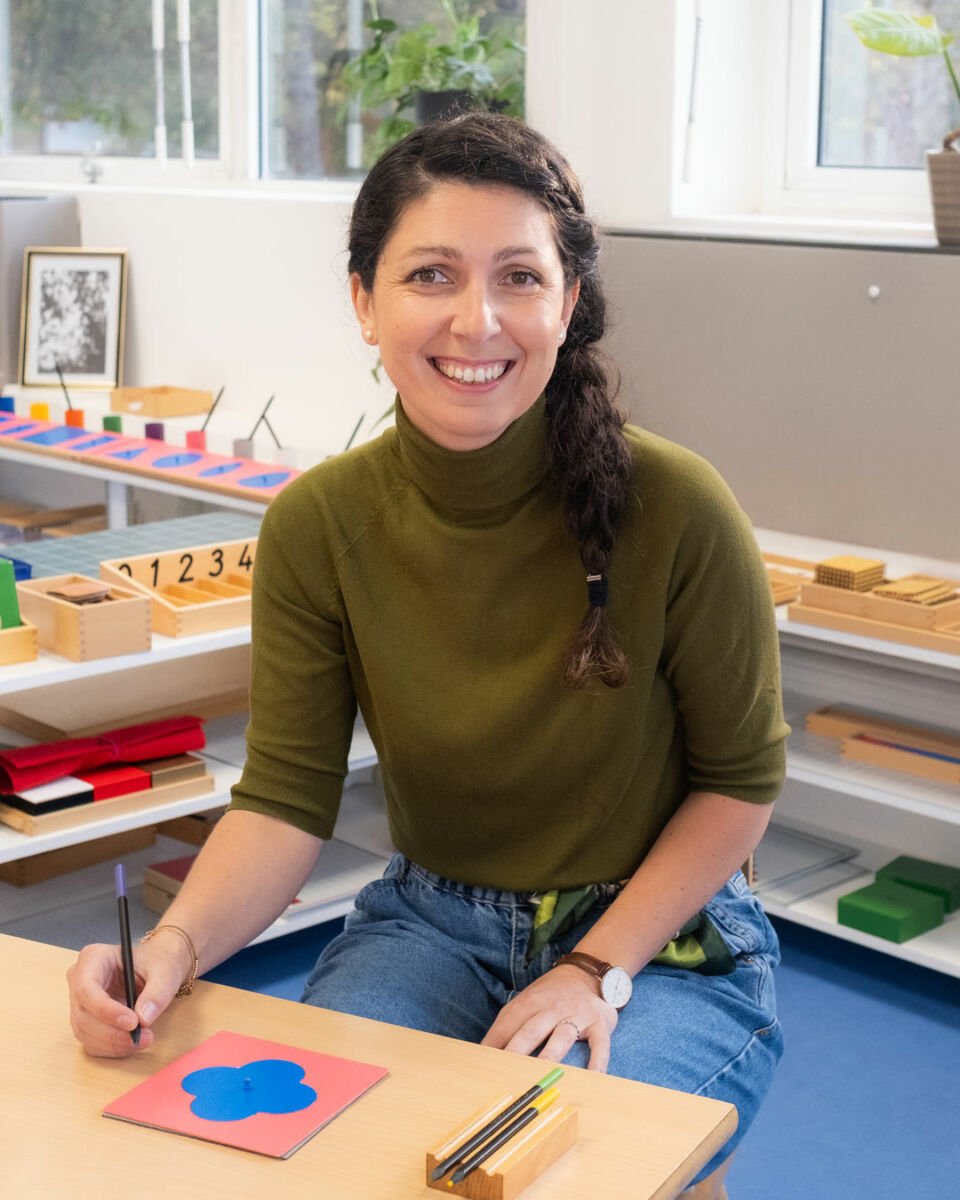
Nadège
Green Class
Francophone AMI Montessori Educator 3–6 years
Biot
3–6 years

Here, children learn to think for themselves. To act with intention. To trust their own abilities. This is the Children's House: a place where everything is designed so the child can do it independently.
Develop coordination, concentration, and independence through everyday activities.
Refine the senses and build the foundation for abstract thinking.
Develop reading, writing, and oral expression through hands-on materials.
Build mathematical understanding from concrete to abstract.

Each child chooses their own work, moves freely in the classroom, and works at their own rhythm. This freedom is not permissiveness — it is the freedom to develop self-discipline, concentration, and intrinsic motivation.

Older children help younger ones, reinforcing their own knowledge. Younger children observe older peers and aspire to their level. This natural dynamic creates cooperation, empathy, and leadership.

Daily time outdoors for gardening, nature walks, and free play. The natural environment supports physical development, sensory exploration, and emotional well-being.
Morning
Midday
Afternoon
Transforming a few everyday gestures.
A few simple adjustments — adapted space, slowed-down demonstration, time to repeat — are all it takes to help your child grow more independent at home.
DiscoverEverything is designed at the child's scale: furniture at their height, materials they can carry, and spaces they can navigate independently. The classroom is organized into five distinct areas, each offering materials that progress from simple to complex. Order, beauty, and accessibility support the child's natural development.
"Follow the child."
The Montessori educator is not a teacher who imparts knowledge, but a guide who prepares the environment and connects the child to the right materials at the right moment. She observes carefully, intervenes minimally, and trusts the child's natural drive to learn.
Step inside our 3–6 classroom and see how children thrive in a Montessori environment.
Take a virtual tour and see how our preschoolers explore, learn and grow in a prepared environment designed for their unique developmental needs. Discover the richness of the Montessori 3-6 curriculum.
Discover our passionate educators who guide each child with care and expertise.
Help me do it myself, grow, explore, succeed
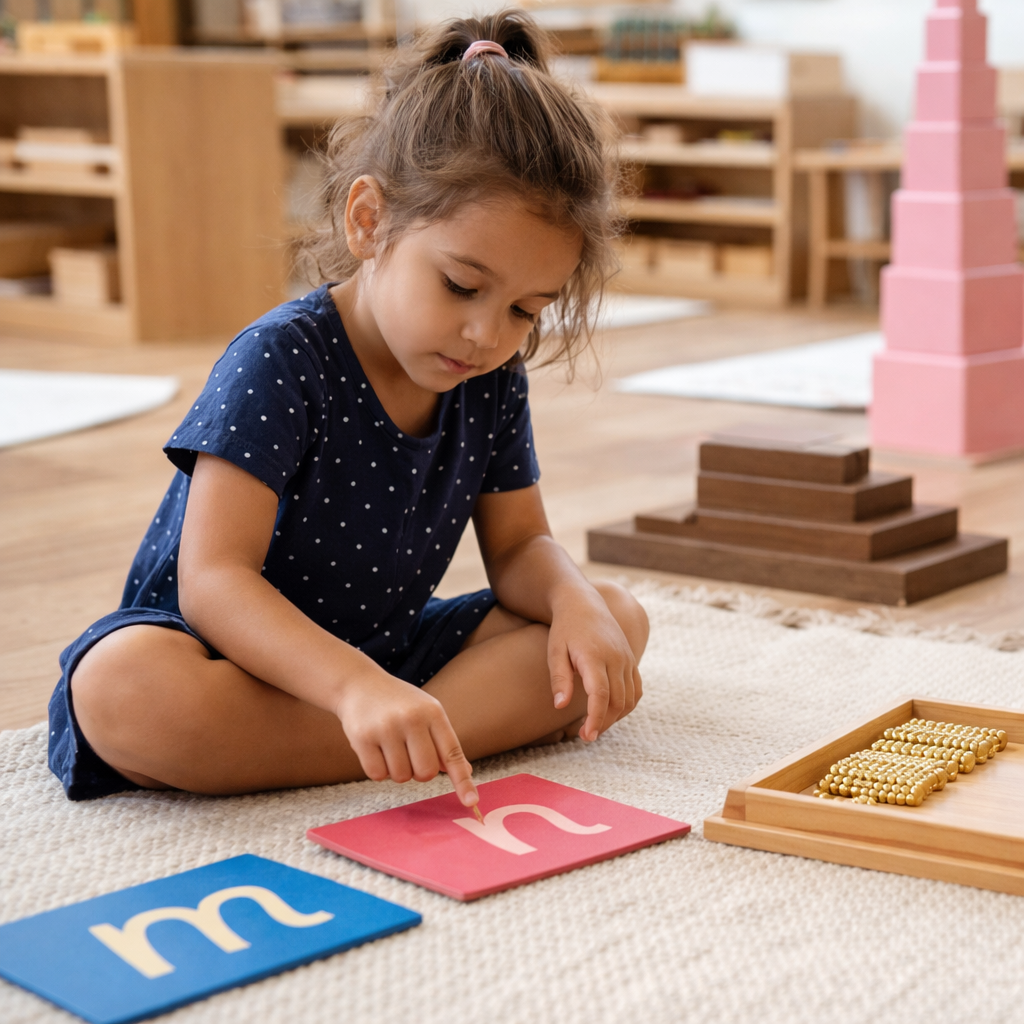
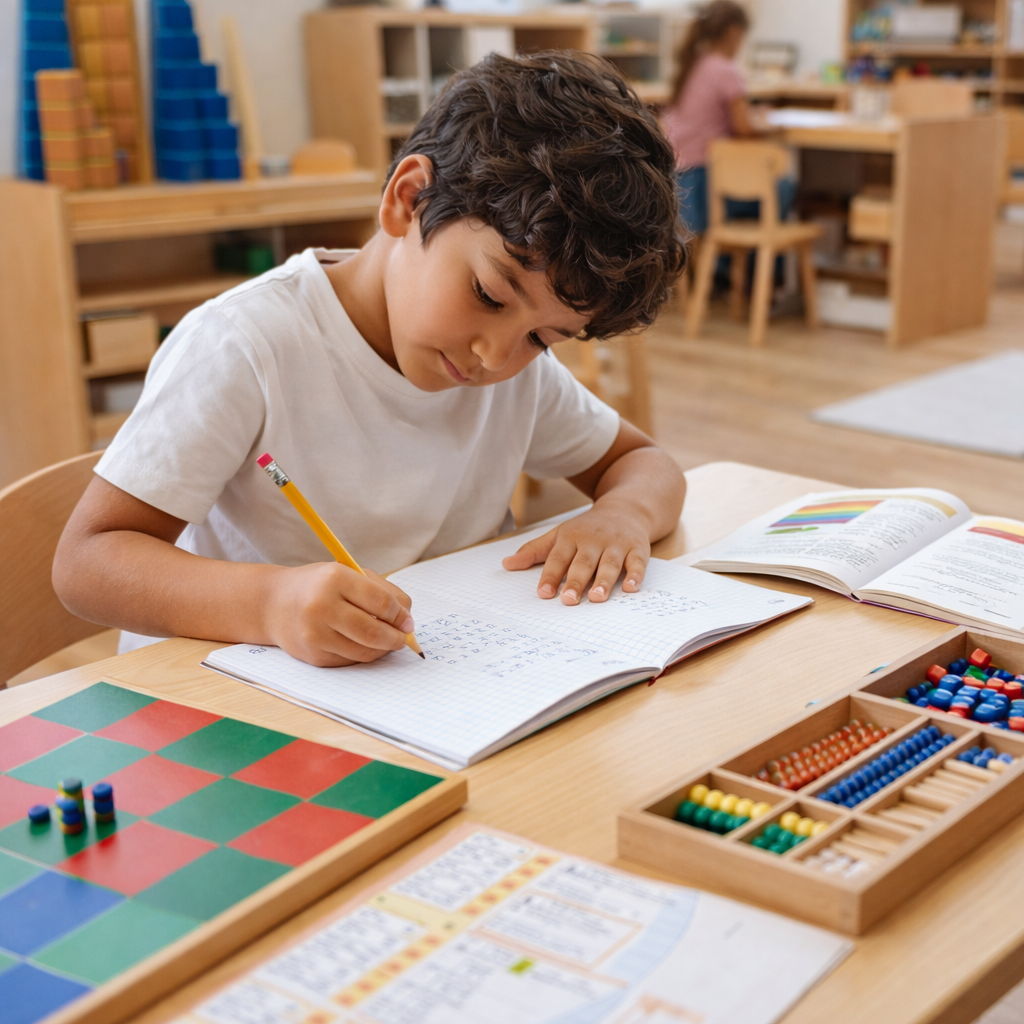

Through hands-on materials that progress from concrete to abstract. Children first learn the sounds of letters, then trace sandpaper letters, and eventually move to writing with the movable alphabet and reading phonetic words.
The multi-age classroom naturally fosters social skills. Children learn to cooperate, resolve conflicts, and take leadership roles. Grace and courtesy lessons teach appropriate social interactions.
Each child works at their own pace with individualized lessons. Educators observe and introduce new materials when the child is ready. This ensures mastery without pressure or competition.
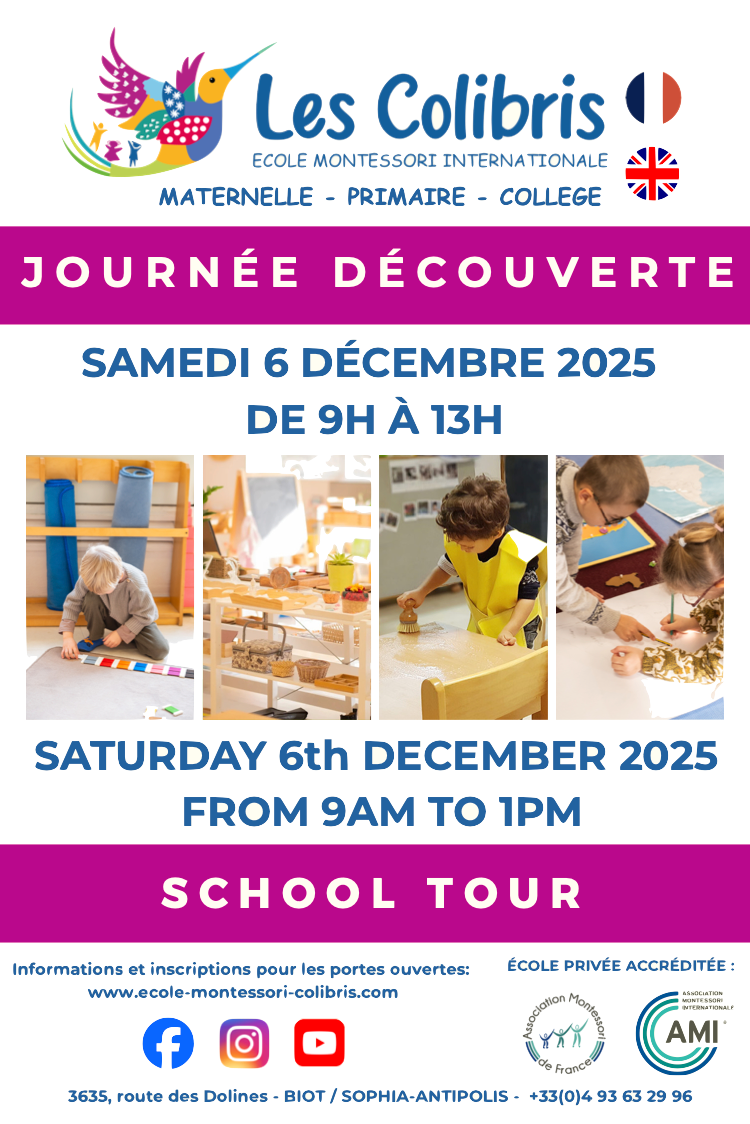
A visit is the best way to understand what makes this approach unique.