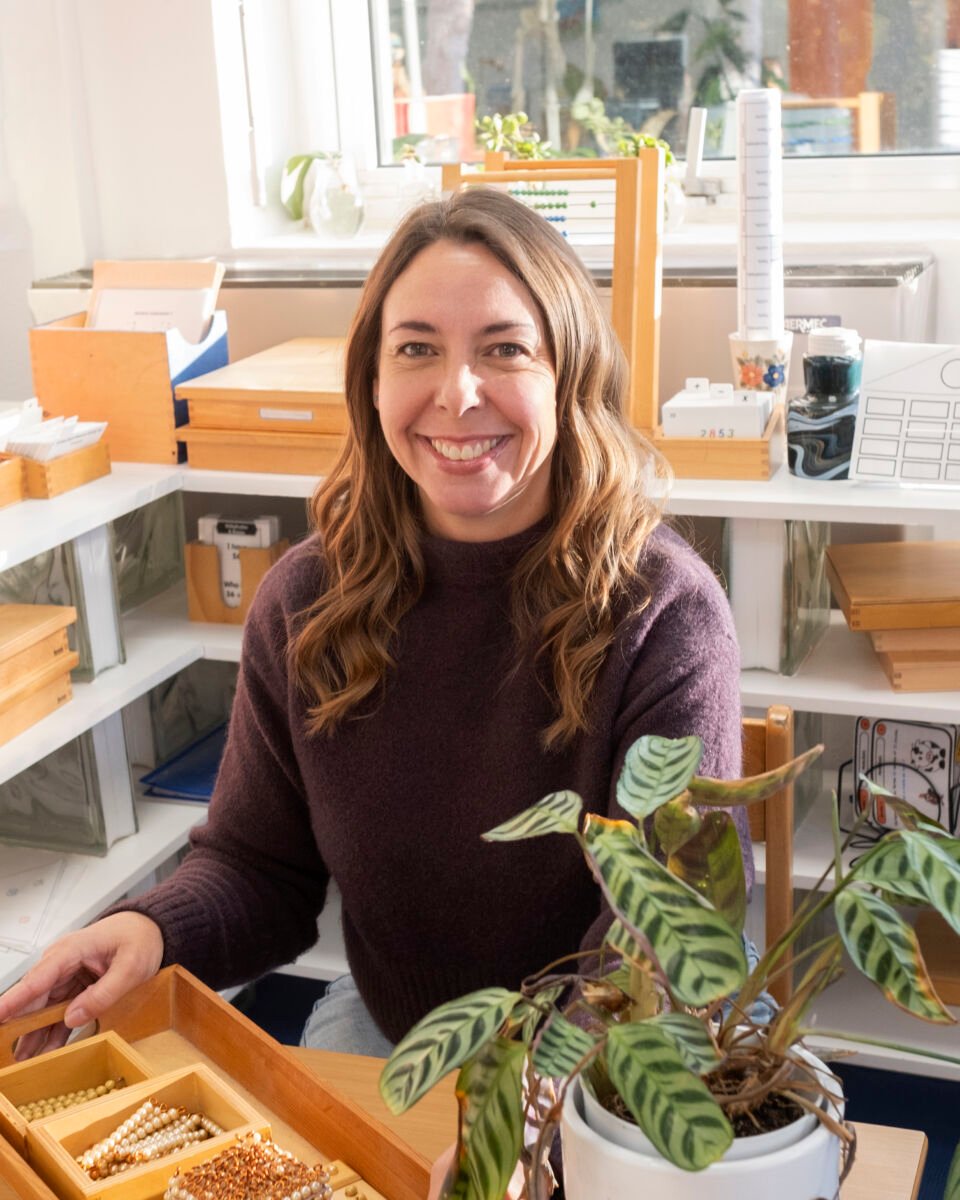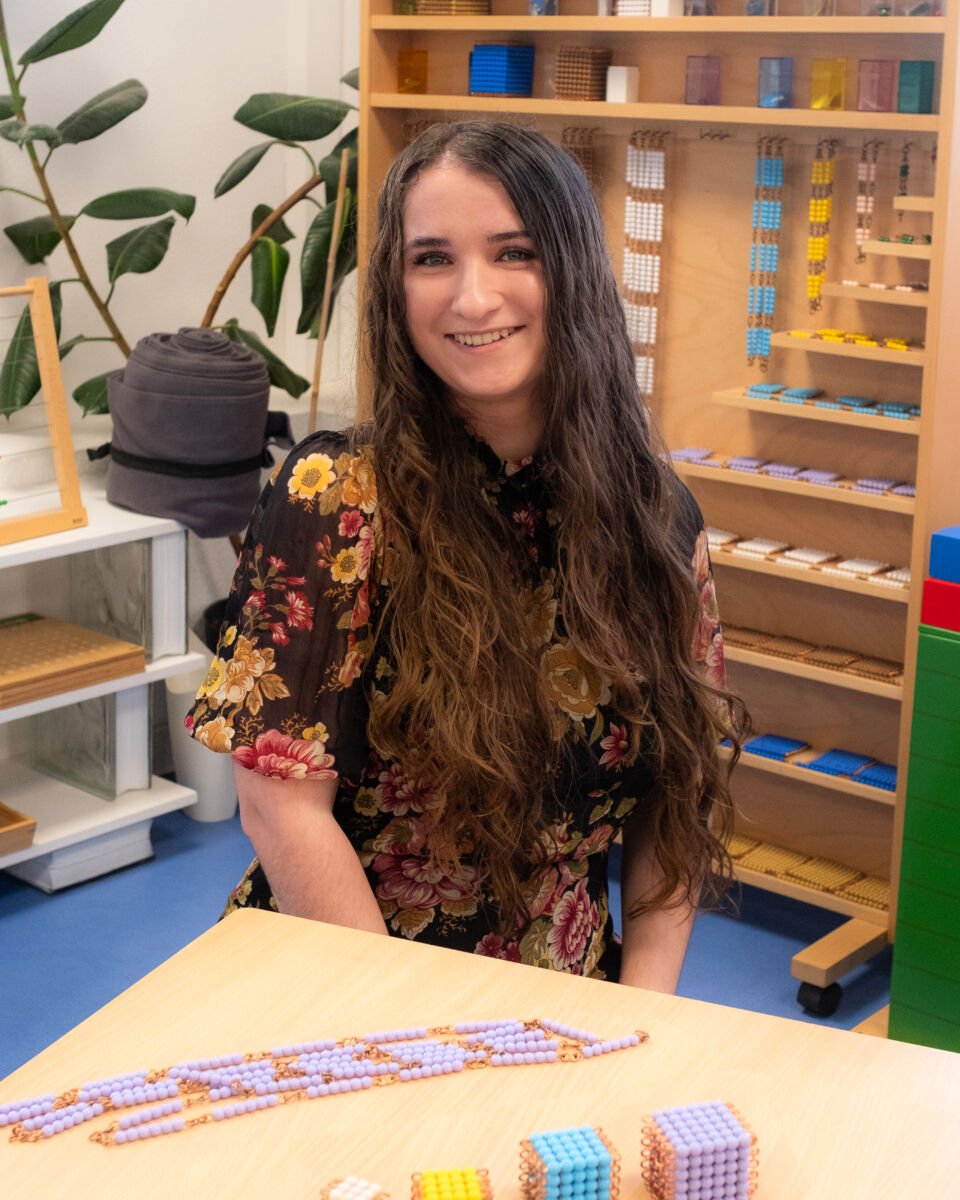
Inès
Orange Class 6-9
Francophone AMI Montessori Educator 6–12 years
Biot
Primary

At this age, the child wants to understand everything. Why the Earth turns. How numbers work. Where civilizations come from. Montessori gives them the keys — and the freedom to think for themselves.
Develop logical thinking and problem-solving skills through hands-on, concrete materials.
Explore abstract concepts and creative expression through stories and projects.
Learn time management, organization, and care for the environment.
Work with peers on group projects and develop social skills.
Take ownership of learning and make choices about work.

From the Big Bang to ancient civilizations, children explore the interconnectedness of all knowledge through stories, timelines, and sensory materials.

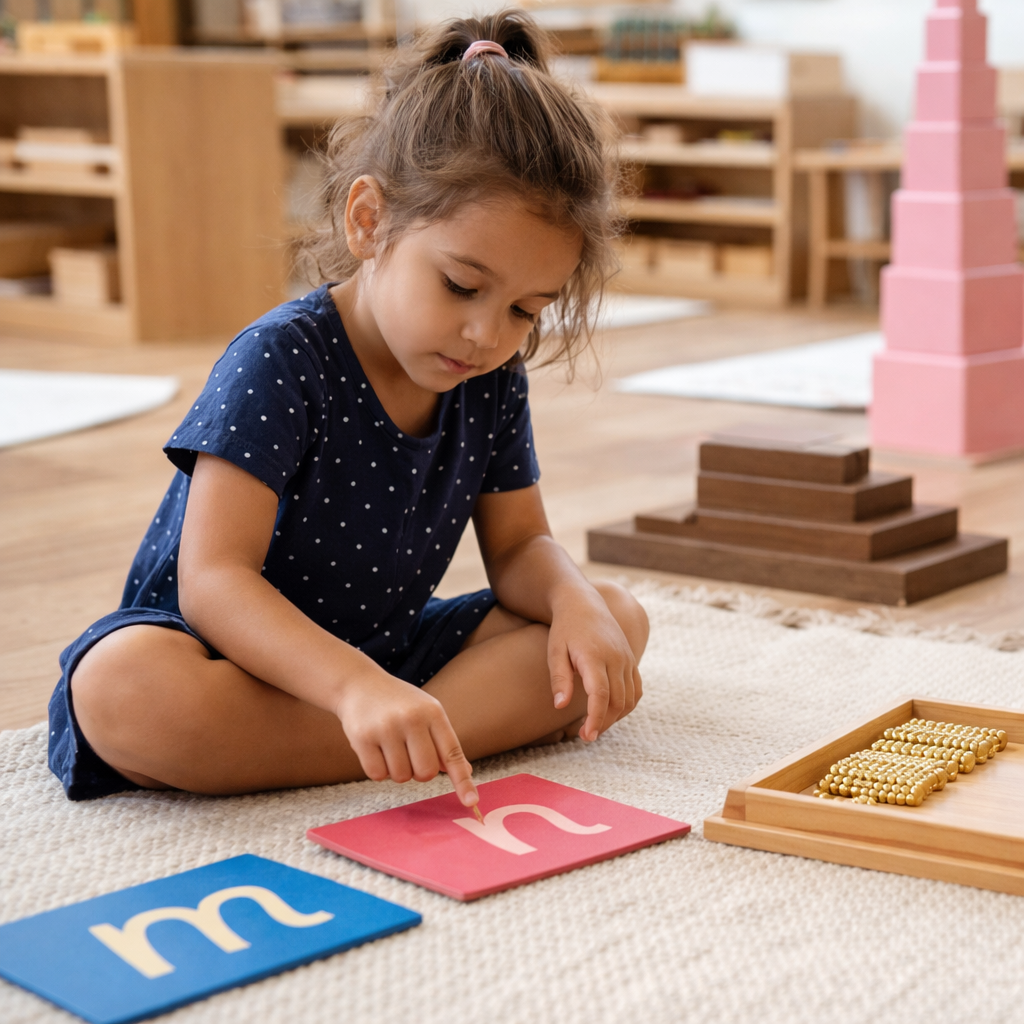
Progress from concrete understanding to abstraction in numbers, operations, geometry, and algebra using specialized Montessori materials.

Develop reading, writing, grammar, and research skills through story analysis, creative writing, and collaborative projects.
Morning
Midday
Afternoon
Transforming a few everyday gestures.
A few simple adjustments — adapted space, slowed-down demonstration, time to repeat — are all it takes to help your child grow more independent at home.
DiscoverThe elementary classroom is organized into curriculum areas with materials that progress from concrete to abstract. Children move freely, choosing work that interests them and collaborating with peers. The environment includes spaces for individual work, group projects, and creative expression.
"Follow the child, but guide them."
The elementary educator presents big ideas and connects children to materials that spark their curiosity. She observes interests, suggests projects, and guides children toward deeper understanding while respecting their independence and creativity.
Step into our 6–9 and 9–12 classrooms and discover education in action.
Take a virtual tour and discover how primary students explore learning, collaborate on research projects, and develop critical thinking in our carefully prepared Montessori environment.
Discover our passionate educators who guide each child with care and expertise.
Help me do it myself, grow, explore, succeed


We follow the French National Education program while fully integrating Montessori pedagogy.
Children are progressively prepared for middle school through structured work, methodology and growing autonomy.
Work is essentially done at school during the long work cycles.
Assessment is formative and continuous, with detailed progress reports and portfolio presentations.
Each elementary class welcomes around 25 children aged 6 to 12, guided by one Montessori educator and one English-speaking assistant.
A visit is the best way to understand what makes this approach unique.